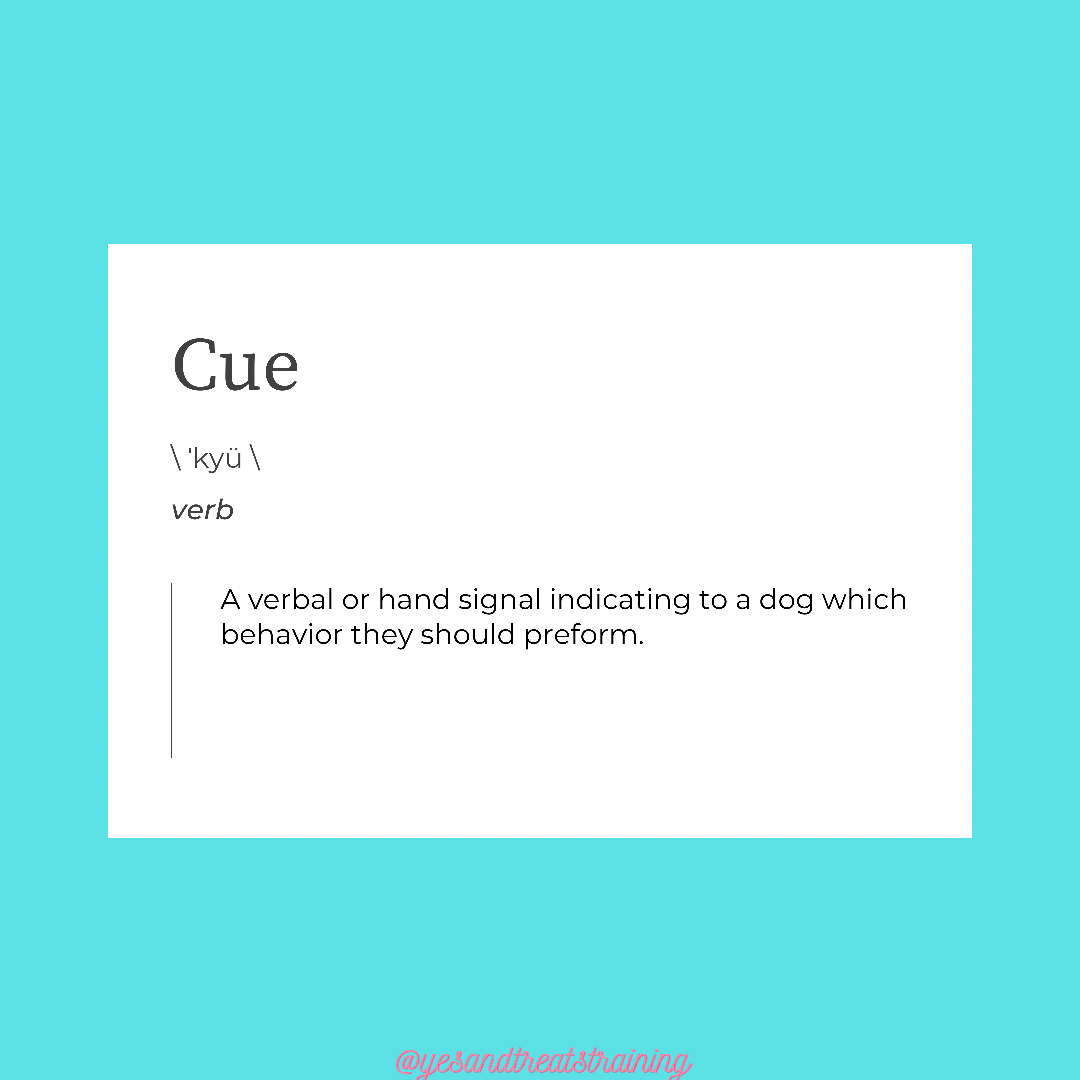
Cues - What’s a cue?
Cues - What’s a cue?
For the next few days I want to go over cuing and then we can go onto marking, it only makes sense since we covered treating/rewarding right?
Plain and simple a cue is a verbal or physical signal that tells the dog what behavior to perform. Easy right? Okay we’re done… just kidding.
Although that is what a cue is, there is so much more to it. We give off cues everyday and don’t even realize it. We even perform behaviors for cues throughout our day without a second thought. For example: our alarm; our alarms go off every morning (or night) telling us it’s time to get up and start our day. It doesn’t even have to be a physical alarm that we set, it could be hearing your neighbor leaving for work at the same time everyday (after awhile it becomes habituation which I may talk about later).
What I’m getting at is cuing is all around us, it’s asking for a specific behavior. Your boss could ask you to input the new staff into the system and after being taught what that means you do it; is that not the same as us asking our dog to “sit” and “wait” while we get their food ready? We even cue (ask) people to perform behaviors (do a task) for us, “can you take out the garbage?” “can you pick up her medicine?” “can you hand me the tv remote?” See.
As you can tell everything is a question, we are asking them not telling them. We do not want to command our dogs to do anything, remember this is a partnership, we want our dogs to make the choice to listen to us. That’s why you’ll hear most Positive Trainers using the word “cue” instead of “command”.
Even though we teach our dogs certain cues to do specific behaviors we want, they are very aware of what we do and will learn their own cues. Now what I mean is they will notice when you put your shoes on that means your’e probably going to leave; when you grab their leash your’e going to take them out. Again this can start to fall into habituation because it can end up being a routine, which is not necessarily a bad thing. Routines give our dog confidence since they know what to expect next. I wane you to be aware of what your pup is noticing you do and how they behave right after. If it’s something you like you can start treating and letting them know they are doing a good job with this unintentional cue which can now be intentional. If they behave in a way you don’t like then you can start training them to do a different behavior when you do that action.
Now we can start to dive into training with an intentional cue such as a verbal cue or a physical cue meaning a hand signal etc.